
One of the most common questions we hear at Cryosonic Wakefield is:
Why did it last after one treatment?
It’s a completely fair question. A common misconception is that freezing a lesion means it drops off right away. Actual skin biology is a bit more complicated than that.
For example, some lesions clear in one session. Others require staged treatments. Often, the difference lies in depth, blood supply, tissue type, and how well the body heals.
Let us examine it very simply and truthfully.
Surface vs Deep Lesions: Why Depth Matters
Not all skin lesions sit at the same level.
Some are very superficial — meaning they exist only in the uppermost layer of skin. These often respond quickly because the freezing process can fully penetrate the abnormal cells in one controlled application.
Others reach further down into the skin structure. A single freeze is often inadequate because, as a lesion extends deeper into the dermis, fewer surrounding healthy cells may be damaged without causing collateral damage.
At Cryosonic Wakefield, we assess lesion depth carefully before treatment. The goal is effective clearance — without unnecessary trauma to the skin.
Epidermal vs Dermal Involvement Explained
The skin has layers:
- Epidermis (top layer)
- The dermis (the inner layer containing blood vessels and collagen)
Epidermal lesions are often less complicated. But, if a lesion is going to extend into the dermis, it becomes more resistant to freezing because:
- The tissue is thicker.
- Blood supply may protect deeper cells.
- Collagen structure needs to be preserved to prevent scarring.
This is why deeper lesions are often treated gradually rather than aggressively.
Hyperkeratotic Warts vs Soft Skin Tags: Different Biological Behaviour
Not all lesions behave the same way.
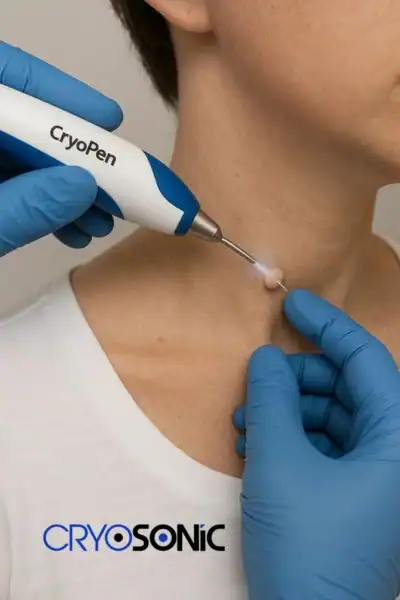
Skin tags are soft, pedunculated (hanging) lesions with minimal depth. They typically respond very well to cryotherapy and often require only one session.
Warts, however, are biologically different. These are lesions due to the human papillomavirus (HPV) and tend to get thickened layers of insistent keratin (hyperkeratosis). That thickness provides insulation, making it less likely for the freeze to be able to penetrate very deeply. Checkout Our Wart Removal Treatment Here
In addition, viral tissue can extend below the visible surface. That’s why warts frequently require multiple treatments — it’s not a failure, it’s biology.
The Role of Blood Supply in Freeze Resistance
Blood flow matters more than most people realise.
Lesions with a strong vascular supply can partially resist freezing because circulating blood helps moderate tissue temperature. This can reduce the depth of effective cellular destruction in one session.
When this happens, Cryosonic Wakefield may recommend staged treatment to:
- Avoid excessive freezing
- Protect the surrounding healthy tissue.
- Reduce scarring risk
Controlled progression is always safer than over-treatment.
Freeze–Thaw Cycles: Why One Pass Isn’t Always Enough
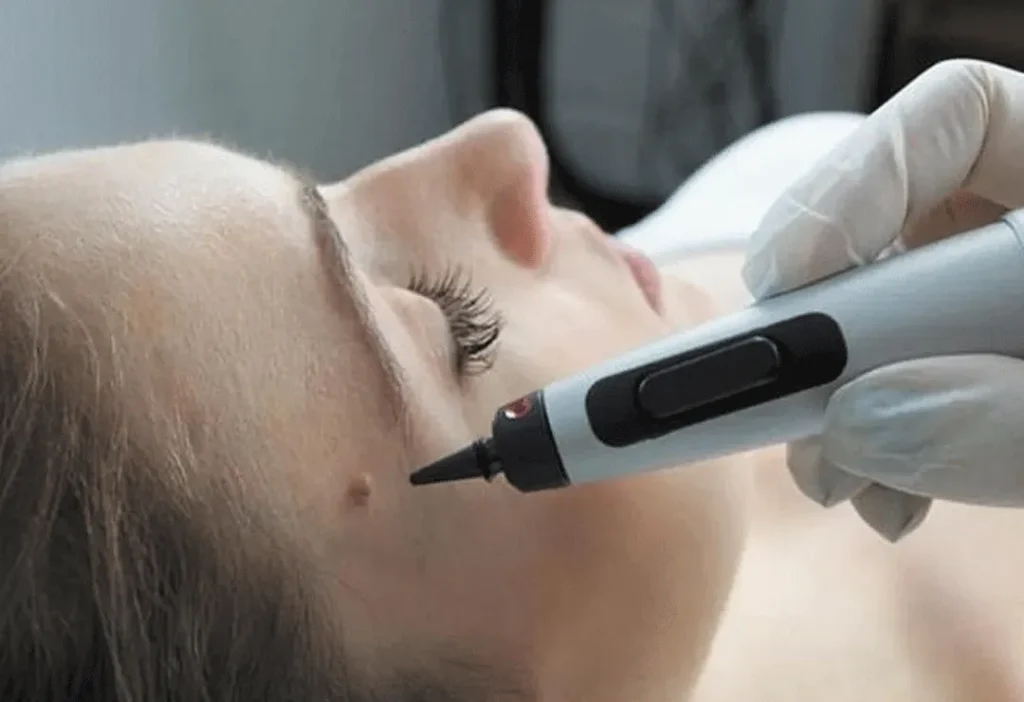
Cryotherapy acts by rapidly freezing tissues, which induces:
- Intracellular ice crystal formation
- Cell membrane rupture
- Controlled cell death
But with a single freeze cycle, thicker lesions may not have all the abnormal cells killed off. That is exactly the reason freeze–thaw cycles will sometimes be repeated during a session, or staged across appointments.
Gradual destruction allows your body to clear damaged cells naturally through the healing process.
Thermal Shock Duration and Controlled Tissue Destruction
Effective cryotherapy isn’t about “longer is better.” It’s about precision.
If tissue is frozen for too short a time, the lesion may survive. If frozen too long, the surrounding healthy tissue may be damaged.
At Cryosonic Wakefield, freeze time is carefully calibrated depending on:
- Lesion type
- Size
- Depth
- Location
- Skin type
This balance ensures controlled destruction — not unnecessary trauma. See Here Why People Choose us For Lesion Removal Treatment
Why Over-Freezing Increases Scarring Risk
More aggressive freezing does not mean better results. Over-freezing can:
- Damage to collagen in the dermis
- Increase blister size
- Prolong inflammation
- Raise the risk of pigmentation changes.
- Increase the likelihood of scarring.
Our approach is conservative and clinically responsible. It’s better to treat in stages than risk a permanent mark.
Realistic Expectations: What “Gradual Clearance” Means
Many lesions do not “fall off overnight.” You may experience:
- Redness
- Mild swelling
- A blister or scab
- Gradual shrinkage over weeks
Some lesions reduce significantly after the first session and disappear completely after a second treatment. Gradual clearance is normal. It does not mean the treatment hasn’t worked.
Signs a Lesion May Require Staged Treatment
You may need more than one session if:
- The lesion is thick or hardened.
- It has been present for many months or years.
- It bleeds easily (indicating vascular supply)
- It is located on thicker skin (e.g., hands or feet)
- It only partially reduces after initial healing.
At Cryosonic Wakefield, we review progress and only recommend further treatment if clinically appropriate.
When Cryotherapy Is Not the Appropriate Option
Cryotherapy is excellent for many benign lesions — but it is not suitable for everything.
We do not treat:
- Suspicious pigmented moles
- Lesions with irregular borders or colour variation
- Rapidly changing growths
- Lesions requiring histological analysis
In such cases, we will advise GP referral. Patient safety always comes first.
Frequently Asked Questions About Multiple Cryotherapy Treatments
Q: Why didn’t my lesion clear after one cryotherapy treatment — did it fail?
Not necessarily. Some lesions shrink after the first treatment but need additional sessions to fully clear. This often happens when the lesion is thicker or extends deeper into the skin. At Cryosonic, we usually review the area after healing to decide if another treatment is needed.
Q: How many cryotherapy sessions will I actually need before my lesion fully clears?
The number of procedure sessions will depend on the type, size and depth of the lesion. Small skin tags usually resolve in one treatment, whereas thicker or older lesions may require 2 or more treatments. At Cryosonic, we guide you through realistic expectations during your assessment.
Q: How long should I wait between cryotherapy treatments for the best results?
Most clients need about 4–6 weeks between treatments. This enables complete skin healing and gives us a clear idea of what has been achieved in the first session before moving on to any further treatment.
Q: What should my skin look like during the days and weeks after cryotherapy treatment?
It’s normal to see redness, mild swelling, or a small blister shortly after treatment. A scab may form and gradually heal over the following weeks as the damaged tissue sheds and new skin develops.
Q: Will I have to pay full price again if my lesion needs a second or third cryotherapy session?
It depends on the lesion type and progress made. Before your first treatment, we always discuss the realistic likelihood of needing multiple sessions so there are no surprises on cost. We never recommend a follow-up unless it is clinically necessary.
To get a clear picture of costs for your specific lesion, call us on 03300 100 392 or book a consultation today.
Q: How much will it cost if my lesion needs a second or third cryotherapy treatment?
We discuss all potential costs upfront during your initial consultation so there are no surprises. Follow-up sessions are typically charged at a reduced rate, and we will never recommend further treatment unless it is clinically necessary.
Q: How do I know if my wart or verruca is actually getting better between sessions?
Positive signs that treatment is working include the lesion becoming flatter or smaller, the surface darkening or forming a scab, and the edges becoming less defined. Allow 4–6 weeks before assessing the result — early redness and swelling can make a lesion appear unchanged, but this is normal inflammation, not failure. If you are unsure, contact us for a review appointment.
Q: Is it normal for my lesion to look worse before it gets better after cryotherapy?
Yes — this is one of the most common concerns after a first treatment. Redness, swelling, blistering, and darkening of the lesion in the days that follow are all part of the body’s natural healing response. The lesion will begin to reduce as the scab forms and sheds naturally over the following weeks. Avoid picking or scratching the area, as this increases scarring risk and slows healing.
Q: How many cryotherapy sessions does a verruca or wart usually need before it’s gone?
The realistic guide for the type of lesion:
- Skin tags — Usually 1 session
- Age spots and Milia — 1–2 Treatments
- Common warts — 2–3 sessions
- Warts: a) 3–4 treatments, often more for deep or longstanding lesions
- Mosaic warts — 4+ sessions
You will generally need more sessions on thicker skin areas, like the hands or feet, or on long-standing lesions. At assessment, we set you up for reality, not the best outcome.
Q: What happens if cryotherapy isn’t working after multiple treatments — what are my other options?
If a lesion is not responding as expected, we review the case honestly rather than continuing treatment indefinitely. Depending on the situation, we may adjust the treatment approach, refer you to your GP if the lesion has changed in a concerning way, or discuss alternatives such as salicylic acid for verrucae or surgical options where appropriate. We will never encourage repeated treatments without clinical justification — if cryotherapy is not the right path, we will tell you clearly.
For further information, please get in touch with us today at 03300 100 392